

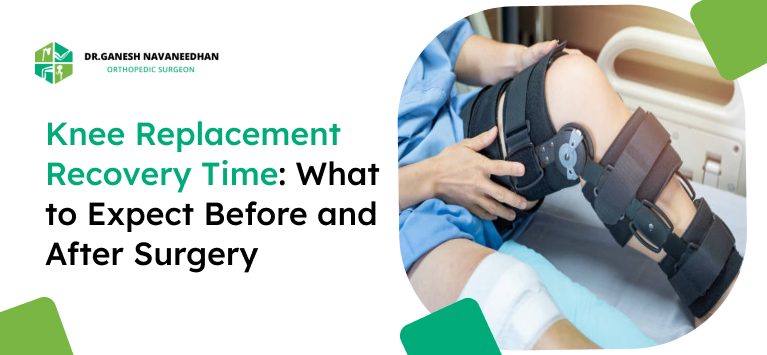
Knee Replacement Recovery Time: What to Expect Before and After Surgery

If you’re preparing for knee surgery, one of the most common questions you may have is — “How long will it take to recover?”
Understanding knee replacement recovery time helps you plan your life, set the right expectations, and stay motivated during your healing journey.
This complete guide explains what happens before and after knee replacement surgery, how long recovery usually takes, what to expect at every stage, and simple tips to help you heal faster.
What Is Knee Replacement Recovery Time?
Knee replacement recovery time means how long it takes for you to return to normal daily life after your knee surgery. It includes healing of your incision, reducing pain and swelling, and regaining strength and flexibility in your knee.
On average:
- Most people can walk with support within a few days.
- You may return to normal daily activities in 6 to 12 weeks.
- Full recovery and maximum comfort can take 6 months to 1 year.
Everyone heals at their own pace. Age, fitness, type of surgery, and how well you follow your doctor’s advice all play a big role in how quickly you recover.
The Two Phases: Before and After Knee Replacement Surgery
There are two main stages to focus on — the period before knee replacement surgery and the recovery time after knee replacement surgery. Both are equally important for a smooth and successful outcome.
Before Knee Replacement Surgery: Preparing for a Faster Recovery
Good preparation can help you heal faster and reduce complications. Here’s what to do before your surgery:
Get Physically Ready
Start gentle exercises that strengthen your legs, especially your thigh and calf muscles. This will make your knee stronger and recovery smoother.
Eat a Balanced Diet
Eat protein-rich foods like eggs, fish, lentils, and nuts. Include fruits and vegetables that support healing — such as oranges, spinach, and carrots.
Maintain a Healthy Weight
Excess body weight can put stress on your new joint. Losing even a small amount can make recovery easier.
Prepare Your Home
Keep essential things within easy reach. Remove rugs or clutter that might cause tripping. You can even install handrails or grab bars for support.
Learn What to Expect
Ask your surgeon and physiotherapist about what will happen after surgery, when you’ll start walking, and how pain will be managed. Being mentally ready helps you stay positive.
Doing these steps before knee replacement surgery gives you a strong start for your healing journey.
After Knee Replacement Surgery: Step-by-Step Recovery Timeline
After surgery, recovery happens in stages. Here’s a simple timeline to help you understand what to expect:
| Time Frame | What Happens | Your Goals |
| Day 1–3 | Hospital stay, pain control, and starting gentle movements | Sit up, stand with help, and begin walking short distances |
| Week 1 | You’ll use a walker or crutches and start physical therapy | Walk a few steps, reduce swelling, do light exercises |
| Weeks 2–3 | Pain starts reducing, and strength improves | Increase movement, begin daily tasks with support |
| Weeks 4–6 | You’ll feel more confident walking and bending your knee | Return to light work, drive (if approved), reduce support |
| Months 3–6 | Strength, balance, and flexibility improve | Resume most normal activities and low-impact exercise |
| 6–12 Months | Full recovery phase | Feel strong, walk comfortably, and enjoy a better quality of life |
Now, let’s go deeper into each stage of knee replacement recovery time and what you can do to make it easier.
Stage 1: First Few Days After Surgery
Right after the operation, you’ll be in the hospital for monitoring. The medical team will manage your pain and swelling and help you stand or walk with support (sometimes on the same day!).
Key tips:
- Keep your leg elevated to reduce swelling.
- Follow your physiotherapist’s instructions carefully.
- Use ice packs as advised.
- Don’t skip your medications.
Small movements early on can prevent stiffness and improve circulation.
Stage 2: First 2–3 Weeks
During this time, you’ll continue gentle physical therapy to increase movement in your knee. You’ll also learn to walk short distances safely.
You may experience:
- Mild pain and stiffness (normal during healing).
- Swelling around the knee.
- Gradual improvement in motion.
What helps:
- Continue using your walker or cane for safety.
- Keep doing knee bending and straightening exercises.
- Don’t rush — focus on slow and steady progress.
This is a crucial phase of knee replacement recovery time, where consistency matters more than speed.
Stage 3: Weeks 4–6 – Regaining Confidence
By this point, you’ll notice major improvements. You might even start walking without a walker or cane. You’ll also be able to perform simple tasks like bathing, dressing, and cooking.
Tips for success:
- Keep following your physiotherapy plan.
- Don’t compare your recovery to others.
- Focus on improving your range of motion.
- Keep using ice after exercise to control swelling.
Some people return to work or start driving (with doctor’s approval) around this stage.
Stage 4: 3–6 Months – Returning to Normal Life
You’ll likely feel much stronger and more confident now. Pain and stiffness should be minimal, and you can resume most daily activities.
At this stage:
- Continue strengthening and stretching exercises.
- Try low-impact exercises like swimming or cycling.
- Avoid high-impact activities like running or jumping.
By 3–6 months, many patients say their new knee feels comfortable and stable.
Stage 5: 6–12 Months – Long-Term Recovery
This is the final stage of knee replacement recovery time. The goal is to achieve full strength, flexibility, and comfort.
What to expect:
- You’ll feel more natural movement in your knee.
- Pain and swelling will be minimal or gone.
- You can return to travel, hobbies, and sports (with medical approval).
Continue following your exercise routine and maintain a healthy lifestyle to protect your new joint for years to come.
Factors That Affect Knee Replacement Recovery Time
Every patient is different, and your recovery speed can depend on many things:
- Age: Younger patients usually heal faster.
- Overall health: Conditions like diabetes or obesity can slow recovery.
- Physical fitness: Strong muscles before surgery mean faster healing after.
- Type of surgery: Partial replacements may heal quicker than total replacements.
- Post-surgery care: Following your doctor’s advice and attending physiotherapy regularly makes the biggest difference.
Tips to Recover Faster After Knee Replacement Surgery
Want to make your healing smoother? Follow these proven tips:
- Do your exercises daily
Your physiotherapy routine is your best tool for quick recovery. - Manage swelling
Use ice packs, compression, and elevation to keep swelling under control. - Eat nutritious foods
Foods rich in protein, vitamin C, and calcium help your tissues heal faster. - Stay active, but careful
Walk short distances daily, and gradually increase your steps as you gain strength. - Stay hydrated
Drinking enough water helps your body flush toxins and supports healing. - Get proper rest
Your body heals best when you’re sleeping. Aim for 7–8 hours each night. - Stay positive and patient
Recovery takes time, but every small step brings you closer to full mobility.
Remember: A positive mindset can make a huge difference in how you feel before and after knee replacement surgery.
Life After Knee Replacement Surgery
The success of your surgery doesn’t stop when you leave the hospital. Maintaining your new joint requires long-term care:
- Keep doing knee exercises regularly.
- Maintain a healthy weight.
- Avoid sudden twisting or high-impact sports.
- Go for regular follow-ups with your orthopedic surgeon.
Living an active, pain-free life is the ultimate goal — and it’s achievable when you follow a healthy recovery routine.
Final Thoughts: Be Patient With Your Knee Replacement Recovery Time
To sum it up, knee replacement recovery time usually ranges from 3 months to a year, depending on your health, effort, and rehabilitation plan.
The journey may feel slow at times, but every step — from the moment before knee replacement surgery to your active life after knee replacement surgery — brings you closer to freedom from knee pain.
With proper care, patience, and commitment, you’ll soon enjoy walking, climbing stairs, and doing what you love — pain-free.