

Recovery Time for Broken Femur with Rod: A Guide for Patients

A broken femur (thigh bone) is one of the most serious bone injuries a person can experience. Because the femur is the strongest and longest bone in the body, it usually breaks only after major trauma such as a road accident, fall from height, or sports injury.
In many cases, doctors treat a femur fracture using a metal rod placed inside the bone, also called an intramedullary nail or femur rod. Patients often ask:
- How long does recovery take after femur rod surgery?
- When can I walk again?
- Will I fully recover?
This blog explains the recovery time for a broken femur with rod in clear, simple language, from surgery to full healing.
What Is a Femur Fracture?
The femur is the large bone between the hip and the knee. A fracture means the bone has cracked or broken completely.
Common causes include:
- Road traffic accidents
- Slips and falls
- Sports injuries
- Osteoporosis (in older adults)
Because the femur supports body weight, proper treatment and rehabilitation are very important.
What Is a Femur Rod Surgery?
Femur rod surgery is also called intramedullary nailing.
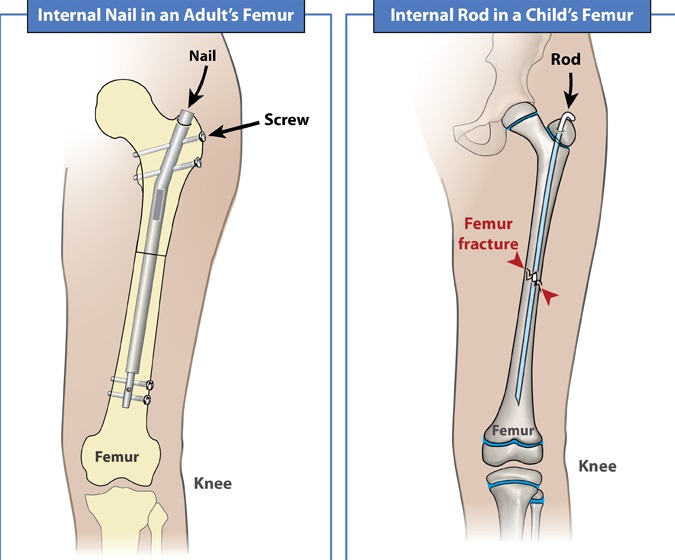
During surgery:
- A strong metal rod is inserted inside the femur
- The rod keeps the broken bone pieces aligned
- Screws at the top and bottom hold the rod in place
This method allows:
- Faster healing
- Early movement
- Strong and stable fixation
Why Is a Rod Used Instead of a Cast?
A femur fracture usually cannot heal well with a cast alone because:
- The bone is deep and strong
- Muscles around it pull the broken pieces apart
- Long immobilisation can cause stiffness and weakness
A rod gives internal support, allowing safer and faster recovery.
Recovery Time for Broken Femur with Rod – Overview
Recovery happens in stages, not overnight. Most patients recover well, but patience is important.
Average Recovery Timeline:
- Walking with support: 1–4 weeks
- Bone healing: 3–4 months
- Daily activities: 3–6 months
- Full recovery: 6–12 months
Recovery speed depends on many factors, which we’ll explain later.
Stage 1: Hospital Stay and Early Recovery (Week 1)
Hospital Stay (3–7 days)
After surgery:
- Pain is managed with medicines
- The wound is monitored
- X-rays confirm rod position
Most patients are encouraged to:
- Sit up within 1–2 days
- Start gentle leg movements
- Begin physiotherapy early
Early movement helps prevent complications like blood clots and muscle stiffness.
Stage 2: First 6 Weeks After Surgery
This is the most important phase of recovery.
Walking After Femur Rod Surgery
- Some patients can stand and walk with a walker or crutches within a few days
- Weight-bearing depends on fracture type and stability
- Your orthopaedic surgeon decides how much weight you can put on the leg
Pain and Swelling
- Pain gradually reduces over weeks
- Mild swelling around thigh and knee is normal
- Pain medicines are slowly reduced
Physiotherapy Focus
- Knee and hip movement
- Muscle strengthening
- Balance and posture
Regular physiotherapy is essential for good recovery.
Stage 3: Bone Healing Phase (6–12 Weeks)
By this time:
- Pain is much less
- X-rays show early bone healing
- Walking becomes easier
Weight Bearing
- Many patients move from partial to full weight-bearing
- Walking aids may still be needed
Daily Activities
You may slowly return to:
- Light household work
- Desk or office jobs
- Short outdoor walks
However, heavy lifting and running are still avoided.
Stage 4: Functional Recovery (3–6 Months)
This is when patients feel more confident.
What Improves During This Stage?
- Muscle strength
- Walking speed
- Balance
- Endurance
Most patients can:
- Walk without support
- Climb stairs
- Drive (after doctor approval)
Some stiffness or mild pain during weather changes or long walks can be normal.
Stage 5: Full Recovery (6–12 Months)
Full recovery means:
- Bone is completely healed
- Muscles regain strength
- You can return to normal life
Sports and Heavy Work
- Allowed only after medical clearance
- High-impact activities need extra care
In most cases, patients return to near-normal function with proper rehabilitation.
Factors That Affect Recovery Time
Not everyone heals at the same speed.
1. Age
- Younger patients heal faster
- Older adults may take longer
2. Type of Fracture
- Simple fractures heal faster
- Multiple or crushed fractures need more time
3. Bone Quality
- Osteoporosis can slow healing
4. Smoking
- Smoking delays bone healing significantly
5. Nutrition
Good nutrition helps faster recovery:
- Protein
- Calcium
- Vitamin D
- Iron
6. Physiotherapy
Patients who follow regular physiotherapy recover better and faster.
Warning Signs During Recovery
Contact your orthopaedic doctor if you notice:
- Increasing pain or swelling
- Redness or discharge from the wound
- Fever
- Sudden difficulty in walking
- Persistent pain beyond expected recovery
Early treatment prevents complications.
Tips to Speed Up Recovery Safely
- Follow weight-bearing instructions
- Attend physiotherapy regularly
- Eat a balanced diet
- Avoid smoking and alcohol
- Take medicines as prescribed
- Keep follow-up appointments
Recovery is a partnership between the patient and the medical team.
Life After Femur Rod Surgery
Most patients return to:
- Normal walking
- Work and daily routines
- Social and family life
Mental confidence improves as mobility returns. Staying positive and patient is very important during recovery.
Final Words
Recovery time for a broken femur with rod usually ranges from 3 to 6 months for daily activities and up to 12 months for full recovery.
Every patient heals differently, but with:
- Proper surgery
- Regular physiotherapy
- Good nutrition
- Medical guidance
the outcome is usually excellent.
If you or a loved one has suffered a femur fracture, consult a qualified orthopaedic surgeon at your local orthopaedic clinic for personalised guidance and follow-up care.