

Is High Tibial Osteotomy Right for You?

If you’ve been dealing with long-term knee pain, stiffness, or early arthritis, you might think knee replacement surgery is your only option. But for some people — especially younger or more active patients — there’s another effective treatment: High Tibial Osteotomy (HTO).
In this detailed guide, we’ll help you understand what an HTO is, who it’s for, how it compares to knee replacement surgery, and what recovery looks like.
By the end, you’ll be able to decide if high tibial osteotomy is the right step for you.
What Is High Tibial Osteotomy?
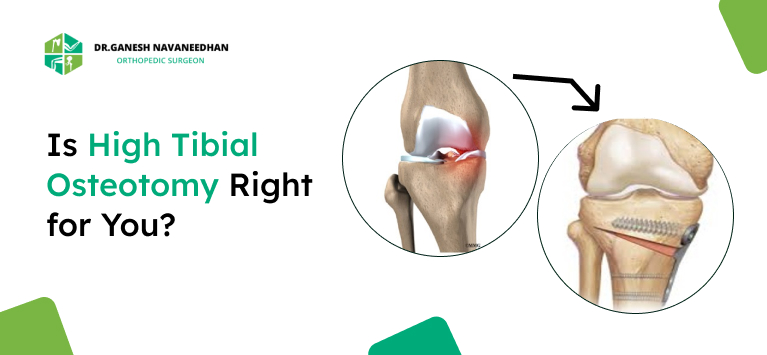
A high tibial osteotomy (HTO), also known as tibial osteotomy or knee osteotomy, is a surgical procedure done to realign your knee joint. It is usually recommended for people with knee arthritis that affects only one side of the knee — most commonly the inner (medial) side.
In simple terms, your surgeon reshapes and repositions the tibia, which is your shinbone, to shift your body weight away from the damaged part of your knee. This helps relieve pain, slow down joint damage, and delay the need for knee replacement surgery.
It is also known as Tibial Osteotomy or Knee Osteotomy or simply HTO. Each term refers to a similar procedure where part of the tibia bone is cut and realigned to improve the knee’s function.
Why Do People Need a High Tibial Osteotomy?
Your knee joint carries most of your body weight. Over time, factors like injury, uneven wear, or early arthritis can cause one side of the knee to bear more pressure than the other. This leads to pain and cartilage wear.
High tibial osteotomy is mainly done for:
- Unicompartmental knee arthritis (arthritis in only one side of the knee)
- Knee deformities such as bow-legged (varus) alignment
- Early-stage osteoarthritis in younger, active patients
- Delaying total knee replacement surgery
In short, HTO is ideal for patients who are too young or too active for a full knee replacement but need long-term relief from pain and improved movement.
Who Is the Right Candidate for HTO?
You might be a good candidate for high tibial osteotomy if:
- You are under 60 years old
- You are physically active and want to continue sports or an active lifestyle
- You have pain mostly on one side of your knee
- Your knee can still bend and straighten properly
- You don’t have severe arthritis in both sides of the knee
Your orthopedic surgeon will take X-rays or 3D scans to evaluate your knee structure and decide whether tibial osteotomy or knee replacement surgery is the better option.
How Is a High Tibial Osteotomy Done?
During HTO, the surgeon makes a precise cut in the upper part of your shinbone (tibia). The bone is then either:
- Opened slightly (opening wedge osteotomy) and a small bone graft or metal plate is inserted to hold the new shape, or
- Closed (closing wedge osteotomy) by removing a small piece of bone and joining the edges to correct the alignment.
This realignment shifts your body’s weight away from the damaged area of cartilage, giving it a chance to heal and function better.
It’s often done under spinal or general anesthesia, and most patients can go home within a few days.
High Tibial Osteotomy vs Knee Replacement Surgery
| Feature | High Tibial Osteotomy (HTO) | Knee Replacement Surgery |
| Age Group | Best for younger, active patients (under 60) | Usually for older adults |
| Joint Preservation | Keeps your natural knee joint | Replaces knee with artificial implant |
| Recovery Time | 3–6 months | 6 weeks – 6 months |
| Durability | Can delay replacement for 5–10 years | Long-term solution (15–20 years) |
| Activity Level | You can stay active and play sports | Some activity restrictions |
If your arthritis is mild to moderate and only on one side, HTO can buy you valuable pain-free years before needing full replacement.
But if the joint damage is severe, knee replacement surgery may still be the better option.
Benefits of High Tibial Osteotomy
A tibial osteotomy offers several benefits for the right patient:
- Delays Knee Replacement:
You can postpone or avoid full knee replacement surgery for years. - Relieves Pain:
By shifting pressure away from the worn-out area, it reduces pain during daily activities. - Preserves Natural Movement:
Unlike a total replacement, your real knee joint remains intact. - Supports Active Lifestyle:
You can continue light sports, walking, or cycling without major restrictions. - Improves Alignment:
A properly aligned knee distributes body weight evenly, reducing future damage.
Many younger patients choose HTO because it offers a balance between pain relief and joint preservation.
Risks and Complications of HTO
As with any surgery, high tibial osteotomy carries some risks, though they’re relatively rare when done by an experienced surgeon:
- Infection at the incision site
- Blood clots
- Nerve or vessel injury
- Over- or under-correction of the bone angle
- Slow bone healing
Following your doctor’s post-surgery instructions can minimize these risks and help you heal properly.
Recovery Timeline After High Tibial Osteotomy
Just like knee replacement recovery, healing after an HTO happens in stages.
Here’s what you can expect:
| Stage | What Happens |
| Week 1 | Hospital stay for 2–3 days. Pain managed with medication. Start gentle movements. |
| Weeks 2–6 | Partial weight-bearing using crutches. Continue physiotherapy. |
| Weeks 6–12 | Gradual increase in walking. Stitches removed. You’ll notice pain reduction. |
| Months 3–6 | Most patients return to light work and daily activities. |
| 6–12 Months | Full recovery — you can walk normally, exercise, and enjoy an active life again. |
Physiotherapy is essential during this period. It helps you rebuild muscle strength, flexibility, and knee stability.
Also Read: How to Use Crutches Correctly
Nutrition and Care After Surgery
Healing after knee osteotomy requires good nutrition and rest.
Eat foods rich in:
- Protein (chicken, fish, eggs, legumes)
- Vitamin C (citrus fruits, tomatoes)
- Calcium (milk, almonds, leafy greens)
- Zinc (pumpkin seeds, whole grains)
Avoid:
- Smoking (slows healing)
- Alcohol (interferes with bone recovery)
Proper diet and hydration support faster bone and tissue repair.
Long-Term Results of HTO
Most people experience excellent results after a high tibial osteotomy. Studies show that it can effectively delay the need for knee replacement surgery for 5–10 years or more.
If arthritis progresses later in life, you can still undergo a knee replacement — the earlier tibial osteotomy won’t prevent it. In fact, it may help you achieve better alignment and joint balance during that later procedure.
That’s why surgeons often recommend HTO before knee replacement surgery, especially for younger patients who want to stay active.
Life After High Tibial Osteotomy
After full recovery, most patients enjoy a pain-free, active lifestyle. You can walk, exercise, and perform daily tasks without discomfort.
However, maintaining your results requires:
- Staying at a healthy weight
- Regular physiotherapy or exercise
- Avoiding high-impact sports or sudden twisting movements
Good long-term care ensures your tibial osteotomy results last for years and delays the need for knee replacement surgery.
Final Thoughts: Is High Tibial Osteotomy Right for You?
High tibial osteotomy (HTO) is an excellent solution for younger or middle-aged patients with arthritis on one side of the knee.
It helps realign the joint, relieve pain, and preserve your natural knee — giving you years of comfortable movement before knee replacement surgery becomes necessary.
If you want to stay active, avoid implants for now, and enjoy better knee function, a knee osteotomy might be your perfect choice.
Talk to your orthopedic surgeon about whether high tibial osteotomy is right for you. With the right preparation, care, and follow-up, you can regain your mobility and enjoy life pain-free.