

Does Cartilage Grow Back?

Cartilage is one of those body parts we don’t think about—until something goes wrong. If you’ve ever had knee pain, joint stiffness, or a sports injury, you might have heard your doctor mention cartilage damage. That leads to a common question: Does cartilage grow back?
What Is Cartilage?
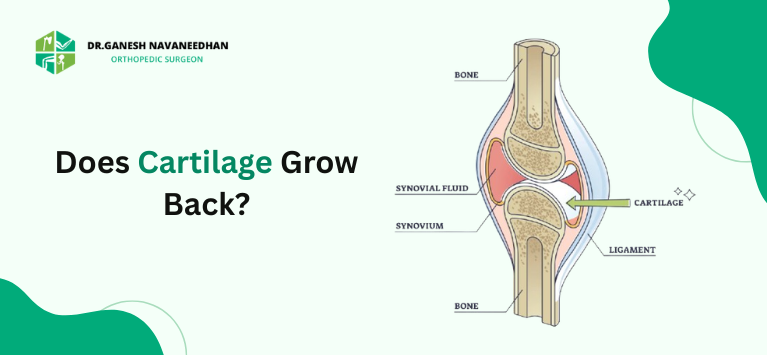
Cartilage is a soft, flexible tissue in your body. It acts like a cushion between your bones, especially in joints like:
- Knees
- Hips
- Shoulders
- Spine
Think of cartilage like a shock absorber. It helps your joints move smoothly without pain.
Does Cartilage Grow Back Naturally?
The short answer is:
Cartilage does not fully grow back on its own.
Unlike skin or muscles, cartilage has very limited healing ability. This is because:
- It does not have its own blood supply
- It gets nutrients slowly from nearby fluids
- Healing cells don’t reach it easily
So when cartilage gets damaged, it heals very slowly—and sometimes not at all.
But Can It Repair a Little?
Yes, in some cases, your body can do small repairs, but it’s not the same as full regrowth.
There are two types of cartilage repair:
1. Partial Repair (Fibrocartilage)
Your body may form a replacement tissue called fibrocartilage.
- It’s weaker than original cartilage
- Doesn’t last as long
- May reduce pain temporarily
2. No Repair
In severe damage, cartilage may not heal at all, leading to:
- Joint pain
- Swelling
- Stiffness
- Conditions like arthritis
Why Cartilage Damage Is a Big Problem
Since cartilage doesn’t heal well, damage can become worse over time.
Common issues include:
- Knee pain while walking or climbing stairs
- Joint stiffness in the morning
- Clicking or grinding sounds
- Reduced mobility
If ignored, it can lead to osteoarthritis, a condition where joints wear down completely.
Common Causes of Cartilage Damage
Cartilage can be damaged due to:
1. Injury
- Sports injuries
- Accidents
- Sudden twists
2. Aging
As you age, cartilage naturally becomes thinner.
3. Overuse
- Repeated movements
- Heavy physical work
4. Obesity
Extra body weight puts pressure on joints, especially knees.
Can Cartilage Be Rebuilt with Treatment?
While natural regrowth is limited, modern treatments can help repair or improve cartilage.
Let’s look at some options:
1. Lifestyle Changes (Most Important)
Simple daily habits can protect and improve joint health.
Maintain Healthy Weight
Less weight = less pressure on joints
Exercise Regularly
Focus on low-impact exercises like:
- Walking
- Swimming
- Cycling
Eat Healthy Foods
Include:
- Leafy greens
- Nuts and seeds
- Fish (rich in omega-3)
- Fruits
2. Physical Therapy
A physiotherapist can help:
- Strengthen muscles around joints
- Improve flexibility
- Reduce pain
Strong muscles support joints and reduce cartilage stress.
3. Medications
Doctors may suggest:
- Pain relievers
- Anti-inflammatory medicines
These don’t rebuild cartilage but help manage symptoms.
4. Supplements
Some supplements may help some people, but results vary. Always check with a doctor before using them.
5. Advanced Medical Treatments
In more serious cases, doctors may recommend:
Injections
- PRP (Platelet-Rich Plasma)
- Hyaluronic acid
These may improve joint lubrication and reduce pain.
Surgery Options
Microfracture Surgery
Creates small holes in bone to stimulate healing.
Cartilage Transplant
Healthy cartilage is placed in damaged areas.
Stem Cell Therapy
Uses special cells to promote repair (still developing in many places).
Can Exercise Help Regrow Cartilage?
Exercise does not regrow cartilage directly, but it helps in many ways:
- Improves joint movement
- Increases blood flow around joints
- Reduces stiffness
- Strengthens muscles
Best exercises:
- Swimming
- Yoga
- Cycling
Avoid:
- High-impact activities like jumping or running on hard surfaces (if you have pain)
Can Diet Help Cartilage Grow Back?
Diet alone cannot regrow cartilage, but it supports joint health.
Foods That Help:
- Vitamin C foods (oranges, lemon) → helps collagen production
- Omega-3 fatty acids (fish, flaxseeds) → reduce inflammation
- Protein-rich foods → support tissue repair
Avoid:
- Processed food
- Excess sugar
- Junk food
Early Signs You Should Not Ignore
If you notice these symptoms, take action early:
- Joint pain during movement
- Swelling
- Stiffness after rest
- Reduced flexibility
Early care can slow down damage.
Can Cartilage Damage Be Prevented?
Yes, to some extent.
Simple Tips:
- Maintain good posture
- Avoid overloading joints
- Warm up before exercise
- Wear proper footwear
- Stay active but don’t overdo
Is Cartilage Damage Permanent?
In many cases, yes—complete natural healing is rare.
But the good news is:
You can still live a normal, active life with proper care.
With the right treatment and lifestyle, you can:
- Reduce pain
- Improve movement
- Slow down further damage
Final Thoughts
So, does cartilage grow back?
Not completely—but it can be managed and improved.
The key is:
- Early care
- Healthy lifestyle
- Proper treatment
Don’t ignore joint pain. Small steps today can prevent bigger problems tomorrow.