


How to Relieve Rotator Cuff Pain at Night

Rotator cuff pain is one of the most common shoulder problems. It affects people of different ages, whether you are an athlete, someone who lifts heavy things at work, or even just someone who spends hours sitting at a desk. This pain can make everyday tasks like lifting your arm, reaching overhead, or even combing your hair feel difficult. For many people, the most frustrating part is that the pain often becomes worse at night, disturbing sleep and making it hard to find a comfortable position.
In this blog, we’ll take a closer look at rotator cuff pain in a way that is easy to understand. We will talk about where rotator cuff pain is usually felt, what it feels like, and why it happens. We will also explain how to relieve rotator cuff pain at night using simple home care methods, exercises, and treatments that actually work.
What is Rotator Cuff?
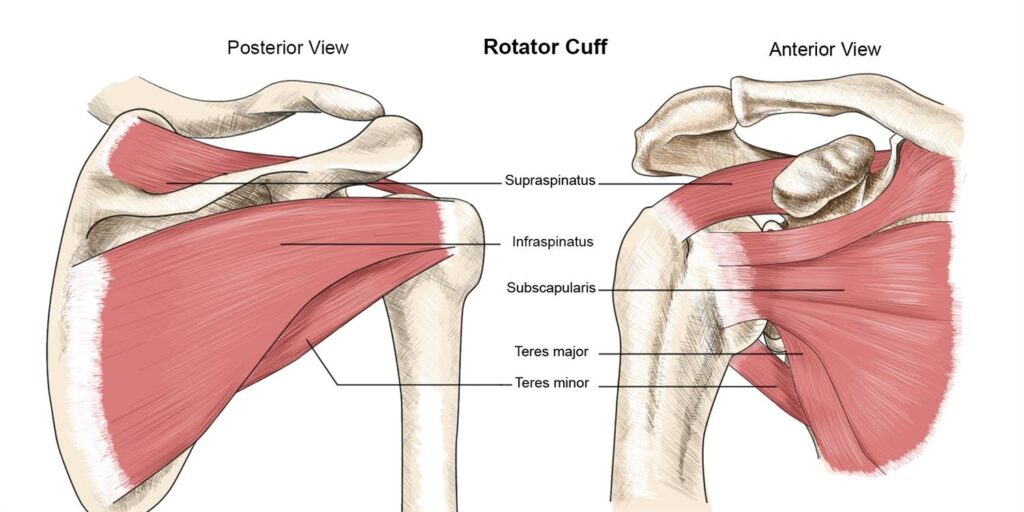
The rotator cuff is a group of four small muscles and their tendons in your shoulder. These muscles and tendons surround the shoulder joint (the ball-and-socket joint where your upper arm bone fits into your shoulder blade).
Functions of the Rotator Cuff:
- Stabilizes the shoulder joint – keeps the ball of the upper arm bone (humerus) securely in the socket of the shoulder blade.
- Helps in arm movement – allows you to lift, rotate, and move your arm in different directions.
- Supports daily activities – from throwing a ball, combing your hair, and lifting objects to even sleeping comfortably.
Where Is Rotator Cuff Pain?
The rotator cuff is made up of four small muscles and their tendons. These work together to hold the shoulder joint in place and allow your arm to move smoothly.
When something goes wrong in the rotator cuff—such as a strain, tear, or inflammation—you may feel pain in very specific areas.
- The most common rotator cuff pain location is on the outer part of the shoulder, often spreading down into the upper arm.
- Some people also feel pain when reaching behind the back or lifting the arm to the side.
- The pain usually does not travel below the elbow.
Rotator Cuff Pain Location Diagram

What Does Rotator Cuff Pain Feel Like?
The way rotator cuff pain feels depends on whether it is caused by irritation, inflammation, or a tear. Most people describe it as
- A dull, deep ache in the shoulder.
- Pain that becomes sharper when lifting the arm, reaching overhead, or lying on the shoulder.
- Night pain, which gets worse when sleeping on the affected side.
- Weakness in the arm, making it hard to do daily tasks like opening jars or lifting bags.
If the pain is ignored, it can become constant and interfere with both rest and movement.
How to Relieve Rotator Cuff Pain at Night
Nighttime is usually when rotator cuff pain feels the worst. The pressure from lying down, combined with less movement, can make the shoulder stiff and painful. But the good news is, there are several ways to make nights more comfortable.
1. Choose the Right Sleeping Position
- On your back: Place a pillow under your injured arm so it rests slightly away from the body. This reduces pressure.
- On your side: If you prefer side sleeping, lie on the opposite side and hug a pillow to keep your shoulder supported.
- Avoid stomach sleeping: This often twists the shoulder in uncomfortable positions.
2. Use Ice or Heat
- Ice packs help reduce swelling and numb sharp pain. Use them for 15–20 minutes before bedtime if pain is recent.
- Heat pads are useful if the pain is long-term or stiffness is a problem. Gentle heat relaxes muscles and increases blood flow.
3. Supportive Devices
- A shoulder sling may sometimes help keep the arm stable at night.
- Special orthopedic pillows designed for shoulder pain can also reduce discomfort.
4. Gentle Pre-Sleep Exercises
Doing simple stretches and rotator cuff pain relief exercises before going to bed can relax the shoulder and prevent nighttime stiffness.
5. Medication and Pain Relief
Over-the-counter painkillers can provide temporary relief. However, these should be used carefully and only as advised by a doctor.
Rotator Cuff Pain Relief Exercises
Exercises are one of the best long-term solutions for rotator cuff pain. They help strengthen the muscles, improve flexibility, and prevent further injury.
Here are some simple and safe exercises you can do:
1. Pendulum Stretch
- Lean forward slightly, keeping your back straight.
- Let your affected arm hang down loosely.
- Gently swing the arm in small circles, clockwise and counterclockwise.
- Do this for 1–2 minutes.
2. Towel Stretch
- Hold a towel behind your back with one hand over your shoulder and the other at your waist.
- Pull gently with the top hand until you feel a stretch in the shoulder.
- Hold for 20–30 seconds; repeat 3 times.
3. Wall Crawls
- Stand facing a wall.
- Place your fingers on the wall and slowly “walk” them upward.
- Go as high as you comfortably can, then slowly lower.
- Repeat 5–10 times.
4. Resistance Band External Rotation
- Attach a resistance band to a stable surface.
- Hold the band with your elbow bent at 90 degrees and close to your side.
- Gently pull the band outward, rotating your forearm away from the body.
- Repeat 10–15 times.
Important: Exercises should not cause sharp pain. If they do, stop and consult a physiotherapist.
Rotator Cuff Pain Treatment
The treatment for rotator cuff pain depends on whether it is a mild strain, inflammation, or a complete tear.
Non-Surgical Treatments
- Rest: Avoid heavy lifting and overhead activities.
- Physical therapy: Guided exercises strengthen the shoulder and prevent stiffness.
- Medications: Anti-inflammatory drugs reduce swelling and pain.
- Steroid injections: For persistent pain, doctors may recommend a cortisone injection.
Surgical Treatments
If the tear is large or conservative treatment does not work, surgery may be needed. Common surgical options include:
- Arthroscopic tendon repair (minimally invasive)
- Open tendon repair (larger incisions for major tears)
- Tendon transfer (when tendons are too damaged)
- Shoulder replacement (in severe cases of arthritis and rotator cuff damage)
How Long Will I Have Pain After Rotator Cuff Surgery?
This is a common concern for people preparing for surgery.
- 1–2 weeks after surgery: Pain and swelling are expected but can be managed with medication.
- 6 weeks: Pain reduces significantly as healing begins.
- 3–6 months: Most patients regain strength and mobility.
- Up to 1 year: Full recovery is possible, especially with regular physiotherapy.
Patience and following post-surgery exercises are the keys to success.
Conclusion
Rotator cuff pain can be frustrating, especially when it interferes with sleep. By understanding where rotator cuff pain is located and what it feels like, you can take the right steps to manage it. Adjusting your sleeping position, using ice or heat, and practicing rotator cuff pain relief exercises can make a big difference at night.
If pain continues, don’t ignore it. Early rotator cuff pain treatment—whether through physiotherapy, medication, or, in some cases, surgery—can prevent the condition from worsening. Recovery takes time, but with patience and consistent care, most people return to normal, pain-free lives.
Frequently Asked Questions
Mild cases improve with rest, ice/heat, and physiotherapy. Severe tears may need surgery.
Yes, shoulder weakness can strain neck muscles, leading to tension and sometimes headaches.
Yes, small injuries often heal with rest, therapy, and exercises. Surgery is usually for large or stubborn tears.
If you have constant shoulder pain, weakness, and difficulty lifting your arm, you may have a tear. Imaging tests confirm it.
No, rotator cuff is not permanent. With treatment and exercises, most people recover fully.
Avoid heavy lifting, overhead reaching, and repetitive shoulder movements until recovery.
Not usually. Numbness may indicate a nerve problem and should be checked by a doctor.
Yes, gentle massage can relieve stiffness and improve blood flow, but it should be done carefully.