


How to Cure Frozen Shoulder Quickly?

Frozen shoulder is a painful condition that can make simple daily activities difficult. Many people struggle to lift their arm, wear clothes, comb their hair, or even sleep comfortably because of shoulder stiffness and pain. If left untreated, the condition may slowly worsen over time.
One of the most common questions people ask is, “How to treat frozen shoulder quickly?” While frozen shoulder may take time to fully heal, early treatment and proper care can help reduce pain, improve movement, and support faster recovery.
In this blog, we will explain what frozen shoulder pain is, what causes frozen shoulder, the symptoms, treatment options, and helpful recovery tips.
What Is Frozen Shoulder?
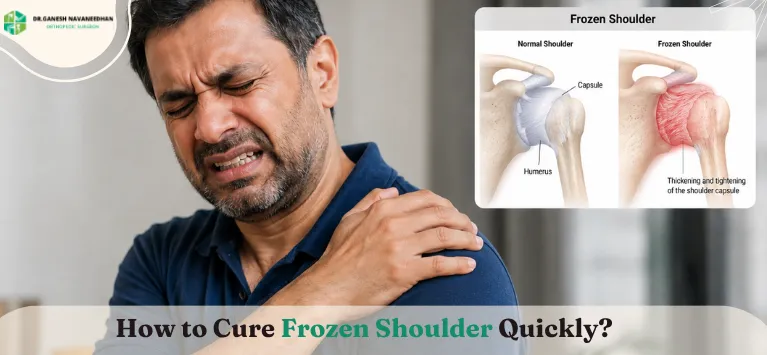
Frozen shoulder, also called adhesive capsulitis, is a condition where the shoulder joint becomes stiff, painful, and difficult to move. The tissue around the shoulder joint becomes tight and inflamed, limiting shoulder movement.
The condition usually develops slowly and may worsen over time if ignored.
Frozen shoulder commonly affects adults between the ages of 40 and 60 and is seen more often in women. It may affect one shoulder or, in rare cases, both shoulders.
What Is Frozen Shoulder Pain Like?
Frozen shoulder pain can feel dull, aching, or severe depending on the stage of the condition.
Many people experience:
- Shoulder stiffness
- Pain while moving the arm
- Difficulty lifting the arm
- Pain during sleep
- Reduced range of motion
- Difficulty reaching overhead or behind the back
The pain may start mildly and gradually become worse. In some people, even small movements can become painful.
What Causes Frozen Shoulder?
Many people wonder, “What causes frozen shoulder?”
The exact cause is not always clear, but several factors may increase the risk.
Common Causes and Risk Factors
Shoulder Injury or Surgery
Keeping the shoulder still for a long time after surgery, fractures, or injuries may lead to stiffness.
Diabetes
People with diabetes have a higher risk of developing frozen shoulder.
Lack of Movement
Limited shoulder movement for weeks or months can increase the chance of stiffness.
Age and Gender
Frozen shoulder is more common in adults over 40 and is often seen in women.
Other Medical Conditions
Conditions such as thyroid disorders, heart disease, Parkinson’s disease, or stroke may also increase the risk.
Stages of Frozen Shoulder
Frozen shoulder usually develops in three stages.
1. Freezing Stage
This is the painful stage. Shoulder movement becomes limited, and pain gradually increases.
This stage may last 6 weeks to 9 months.
2. Frozen Stage
Pain may reduce slightly, but stiffness becomes more severe. Daily activities become difficult.
This stage can last several months.
3. Thawing Stage
The shoulder slowly begins to improve, and movement gradually returns.
Recovery may continue for several months.
How to Treat Frozen Shoulder Quickly
Although frozen shoulder often improves slowly, proper treatment may help manage pain and support faster recovery.
1. Physiotherapy and Stretching Exercises
Physiotherapy is one of the most important treatments for frozen shoulder.
Gentle stretching exercises may help:
- Improve shoulder movement
- Reduce stiffness
- Increase flexibility
- Strengthen surrounding muscles
A physiotherapist can guide safe exercises based on your condition.
2. Pain Relief Medications
Doctors may recommend medications to reduce pain and inflammation.
These may include:
- Anti-inflammatory medicines
- Pain relievers
- Muscle relaxants in some cases
Always take medicines only as prescribed by your doctor.
3. Hot and Cold Therapy
Applying heat before exercises may help loosen the shoulder joint. Cold packs may help reduce swelling and pain after activity.
Many people use:
- Warm towels
- Heating pads
- Ice packs
for temporary relief.
4. Shoulder Mobility Exercises
Simple shoulder exercises done regularly may help improve movement over time.
Common exercises include:
- Pendulum stretch
- Finger walk exercise
- Towel stretch
- Cross-body stretch
Exercises should be done gently without forcing painful movements.
5. Corticosteroid Injections
In some cases, doctors may suggest steroid injections to reduce inflammation and severe pain.
These injections may provide temporary relief and help improve shoulder movement.
6. Lifestyle Modifications
Making small changes in daily activities may help reduce strain on the shoulder.
Helpful tips include:
- Avoid sudden heavy lifting
- Maintain good posture
- Take breaks during repetitive work
- Keep the shoulder gently active
7. Surgery for Severe Cases
If other treatments do not help, surgery may sometimes be recommended.
Procedures may include:
- Shoulder manipulation under anesthesia
- Arthroscopic surgery to release tight tissues
Surgery is usually considered only when symptoms remain severe for a long time.
Can Frozen Shoulder Heal on Its Own?
Yes, frozen shoulder may improve naturally over time in many people. However, recovery can take several months or even years without treatment.
Early care and exercises may help improve comfort and shorten recovery time.
Ignoring the condition may lead to long-term stiffness and reduced shoulder function.
Best Exercises for Frozen Shoulder
Here are some commonly recommended exercises for frozen shoulder recovery.
Pendulum Exercise
Lean slightly forward and gently swing the affected arm in small circles.
Finger Walk
Use your fingers to slowly “walk” up a wall while lifting the arm gently.
Towel Stretch
Hold a towel behind your back with both hands and gently pull upward.
Cross-Body Stretch
Use the healthy arm to gently pull the affected arm across the chest.
These exercises should be performed slowly and carefully.
What to Avoid During Frozen Shoulder Recovery
Certain activities may worsen shoulder pain.
Avoid:
- Sudden jerking movements
- Heavy lifting
- Overstretching
- Intense workouts without guidance
- Ignoring severe pain
Rest is important, but complete immobility may increase stiffness.
How Long Does Frozen Shoulder Last?
Frozen shoulder recovery varies from person to person.
In many cases:
- Mild cases improve within months
- Severe cases may take 1 to 3 years for full recovery
Treatment, exercise, and early diagnosis can help support faster healing.
When to See a Doctor
You should consult a doctor if you experience:
- Persistent shoulder pain
- Difficulty lifting the arm
- Stiffness lasting several weeks
- Sleep disturbance due to shoulder pain
- Reduced shoulder movement after injury
Early medical attention may help prevent worsening stiffness.
Can Frozen Shoulder Be Prevented?
While not all cases can be prevented, certain habits may lower the risk.
Prevention Tips
- Stay physically active
- Do shoulder mobility exercises regularly
- Follow rehabilitation after injuries or surgery
- Avoid keeping the shoulder still for long periods
- Manage conditions like diabetes properly
Simple daily movement can help maintain healthy shoulder function.
Expert Frozen Shoulder Care with Dr. Ganesh Navaneedhan
Dr. Ganesh Navaneedhan is an experienced orthopedic and sports injury specialist known for providing advanced care for shoulder pain, frozen shoulder, sports injuries, arthritis, and joint problems. With a patient-focused approach, he offers accurate diagnosis, personalized treatment plans, physiotherapy guidance, and modern orthopedic solutions to help patients regain shoulder movement and reduce pain effectively. His expertise in managing shoulder stiffness and mobility issues has helped many patients return to their normal daily activities with improved comfort and function.
Final Thoughts
Frozen shoulder can be painful and frustrating, but with the right treatment and regular exercises, many people recover successfully. Understanding what causes frozen shoulder, recognizing frozen shoulder pain early, and starting proper care can make a big difference.
If you are wondering how to treat frozen shoulder quickly, the key is early diagnosis, gentle physiotherapy, pain management, and staying consistent with recovery exercises. Avoid ignoring shoulder stiffness or waiting too long for treatment.
If shoulder pain continues or movement becomes difficult, consult an orthopedic specialist or physiotherapist for proper evaluation and treatment guidance.