

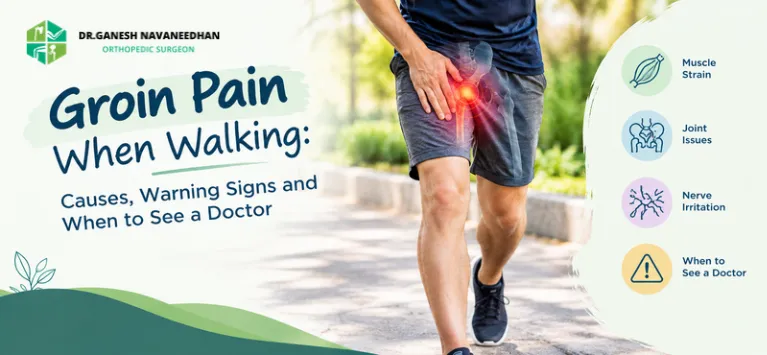
Groin Pain When Walking: Causes, Warning Signs and When to See a Doctor

Groin pain when walking can make simple activities such as climbing stairs, getting out of a chair or taking a short walk uncomfortable. Sometimes the pain may start after exercise or a sudden movement. In other cases, it can develop gradually without any obvious injury.
The groin is close to several important structures, including the hip joint, muscles, tendons and lower abdomen. Because of this, groin pain can have different causes. Identifying the cause is important because the right treatment depends on what is causing the pain.
If you regularly experience groin pain while walking, especially if it is getting worse or affecting your daily activities, it is worth getting it assessed by an orthopaedic doctor.
What Causes Groin Pain When Walking?
There are several possible reasons for groin pain when walking. Some are related to the muscles, while others may come from the hip joint.
1. Hip Osteoarthritis
Hip osteoarthritis is one of the important causes of groin pain, particularly in adults as they get older. It happens when the cartilage and other structures within the hip joint undergo changes over time.
Pain from hip osteoarthritis is often felt deep in the groin. It may become worse when walking, standing for long periods, climbing stairs or bending the hip. Some people may also experience stiffness and reduced movement. The pain can sometimes extend towards the thigh or knee.
You may also notice difficulty doing everyday activities such as putting on shoes and socks or getting in and out of a car.
2. Muscle or Groin Strain
A groin strain can happen when the muscles around the inner thigh or groin are overstretched or injured. It is more common after activities that involve sudden movements, twisting, running or changing direction.
The pain may start suddenly and can feel sharp at first. Tenderness, swelling or bruising may also occur depending on the severity of the injury.
Even after the initial injury improves, returning to intense activity too quickly may cause the pain to come back.
3. Hip Impingement
Hip impingement occurs when there is abnormal contact between parts of the hip joint during certain movements. It can cause deep pain or a pinching sensation in the groin.
The discomfort may become noticeable during activities such as walking, running, sports, bending or prolonged sitting. Some people may also experience clicking or catching around the hip.
4. Tendon or Soft-Tissue Problems
Tendons and muscles around the hip and groin help control leg movement. Repetitive activities or sudden increases in physical activity can irritate these tissues.
You may notice pain while lifting your leg, walking, running or moving the hip in certain directions. Resting from activities that trigger the pain may help, but persistent symptoms should be evaluated.
5. Previous Hip Injury
A previous hip injury, fracture or surgery can sometimes contribute to ongoing hip or groin discomfort. Even if an injury happened months or years ago, changes in the joint or surrounding muscles may later affect walking.
If your groin pain started after a fall, sports injury or other trauma, an orthopaedic assessment can help determine whether the hip or surrounding structures have been affected.
6. Pain Coming From the Lower Back
Not all groin or hip pain actually starts in the hip. Problems involving the lower back can sometimes cause pain that travels into the hip, thigh or groin.
This is why a doctor may examine both your hip and lower back when trying to identify the cause of your symptoms.
Why Does Groin Pain Get Worse When Walking?
Walking puts weight through the hip joint and requires several muscles and tendons around the hip to work together. If the hip joint is irritated or the surrounding tissues are injured, these movements can increase discomfort.
For example, people with hip osteoarthritis may notice groin pain while walking or standing. The pain may also be associated with stiffness and difficulty moving the hip.
However, the pattern of pain alone cannot confirm the cause. A proper examination is often needed.
When Should You Worry About Groin Pain?
Not every episode of groin pain is serious. However, you should consider seeing a doctor if:
- The pain continues for several days or keeps returning
- Walking or climbing stairs has become difficult
- The pain is gradually getting worse
- You have stiffness or reduced movement in the hip
- The pain started after a fall or injury
- You are limping because of the pain
- You cannot put normal weight on the affected leg
- You notice significant swelling, redness or warmth
- You have severe pain that started suddenly
Severe hip pain following an injury, inability to walk or put weight on the leg, or sudden severe pain without an obvious injury requires prompt medical assessment.
How Is Groin Pain Diagnosed?
An orthopaedic doctor will usually begin by asking about when the pain started, what activities make it worse and whether there was an injury.
The doctor may examine your hip, groin, leg and lower back and check your range of movement. Depending on your symptoms, an X-ray or other imaging test may be recommended.
The goal is not simply to identify where you feel the pain but to find where the pain is actually coming from.
How Is Groin Pain Treated?
Treatment depends on the underlying cause.
For a mild muscle strain, your doctor may recommend activity modification, rest from painful activities and gradual rehabilitation. Physiotherapy may also help improve flexibility, strength and movement.
For hip osteoarthritis, treatment may include appropriate exercises, physiotherapy, activity modification, weight management where appropriate and medicines or injections when recommended by a doctor. In some cases, surgery may be considered if symptoms are severe and other treatments have not provided enough relief.
It is better not to continue activities that repeatedly trigger significant pain without finding out why the pain is occurring.
When Should You See an Orthopaedic Doctor?
If you have groin pain when walking that is persistent, worsening or affecting your normal activities, an orthopaedic evaluation can help identify the cause.
Early assessment can be particularly useful when the pain is associated with hip stiffness, reduced movement, limping or difficulty bearing weight. The appropriate treatment can then be planned based on the condition rather than simply treating the pain temporarily.
Consult Dr. Ganesh Navaneedhan in Trivandrum
If you are experiencing persistent groin pain, hip pain or difficulty walking, consulting an experienced orthopaedic specialist can help you understand the underlying problem.
Dr. Ganesh Navaneedhan provides orthopaedic consultation in Trivandrum for patients experiencing problems involving the hip, joints, bones and musculoskeletal system.
A consultation can help assess whether the pain is related to the hip joint, muscles, tendons, previous injury or another underlying condition. Based on the examination and required investigations, the appropriate treatment plan can be discussed.
A Simple Takeaway
Groin pain when walking can have several causes, ranging from a muscle strain to problems involving the hip joint. Hip osteoarthritis, injuries, soft-tissue problems and hip impingement are some possible causes.
If the pain keeps returning, becomes worse with walking or starts affecting your daily activities, do not ignore it. Getting the cause assessed by an orthopaedic doctor can help you receive appropriate treatment and get back to comfortable movement.