

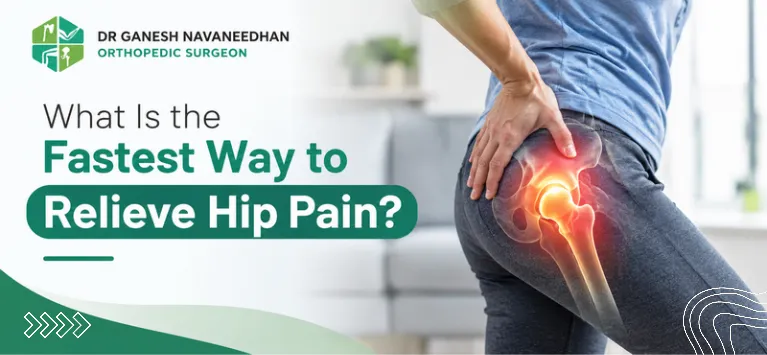
What Is the Fastest Way to Relieve Hip Pain?

The fastest way to relieve hip pain depends on what is causing it. For mild hip pain caused by overuse, muscle strain, or a minor injury, resting from painful activities, applying ice, and using gentle movement may provide relief. However, if hip pain is severe, persistent, or affecting your ability to walk, it is important to see an orthopaedic doctor to find the underlying cause.
Hip pain can come from the muscles, tendons, bones, nerves, or hip joint. Finding the cause is important because the right hip pain treatment depends on the condition.
What Causes Hip Pain?
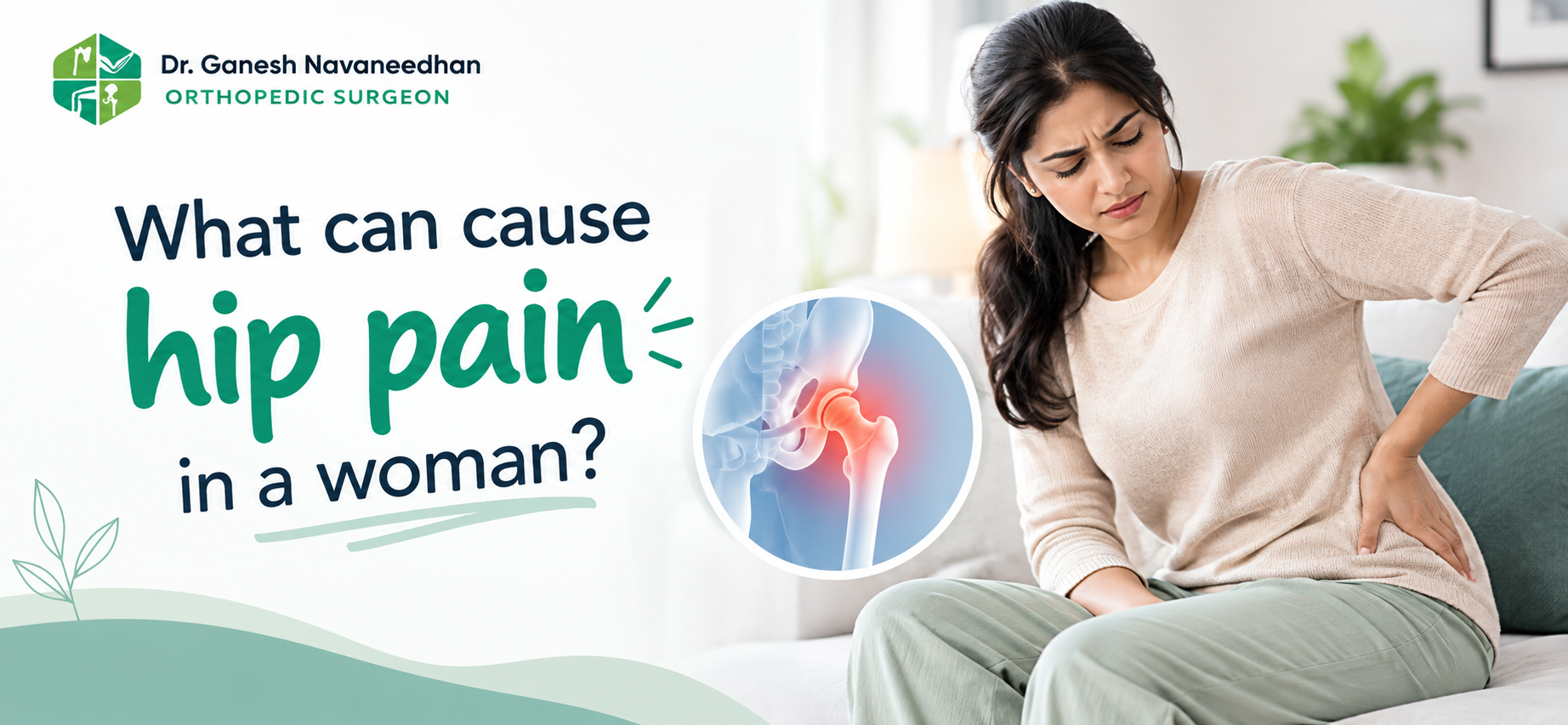
There are many possible causes of hip pain. Some are related to temporary muscle strain, while others may develop because of changes in the hip joint.
Common causes include:
- Muscle or tendon strain
- Sports injuries
- Overuse of the hip
- Bursitis
- Tendinitis
- Hip arthritis
- Joint inflammation
- Nerve-related pain
- Injuries from falls
- Problems in the lower back that cause pain around the hip
The location of the pain can also provide useful information. Pain in the groin may be related to the hip joint, while pain on the outer side of the hip may involve muscles, tendons, or bursae. Pain that travels from the lower back into the hip or leg may sometimes be related to nerve irritation.
How Can You Relieve Hip Pain Quickly?
If your hip pain is mild and has started recently, a few simple measures may help reduce discomfort.
1. Rest From Painful Activities
Avoid activities that make your hip pain worse. Running, jumping, deep squats, climbing stairs, or lifting heavy objects may aggravate an irritated hip.
Short-term activity modification can give the affected muscles, tendons, or joint time to settle.
Rest does not necessarily mean complete bed rest. Gentle movement within your comfort level can help prevent stiffness.
2. Apply Ice After a Recent Injury
If your hip pain started after exercise, sports, or a minor injury, an ice pack may help reduce pain and swelling.
Wrap the ice pack in a towel and apply it to the painful area for about 15–20 minutes. Never apply ice directly to the skin.
3. Keep the Hip Moving Gently
Gentle movement may help maintain flexibility and reduce stiffness. Short, comfortable walks can be useful if walking does not increase your pain.
Avoid forcing stretches or exercises when they cause discomfort. The right exercises for hip pain depend on the underlying condition.
4. Consider Appropriate Pain Relief
Pain-relieving medicines may provide temporary relief for some people. However, not every medicine is suitable for everyone.
People with certain stomach, kidney, heart, or other health problems may need to avoid specific medicines. If you are unsure what is safe for you, speak with a doctor or pharmacist.
5. Avoid Movements That Increase Pain
Pay attention to activities that trigger or worsen your symptoms. Changing the way you exercise, sit, walk, or perform daily activities may help reduce stress on the hip.
If the pain keeps returning despite these changes, professional assessment can help identify the reason.
What Helps Hip Pain When Walking?
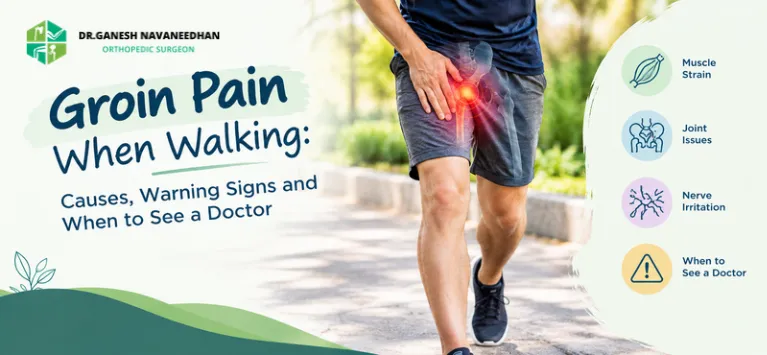
Hip pain when walking can have several causes. Muscle strain, arthritis, tendon problems, injuries, and other hip conditions can make walking painful.
If walking causes mild discomfort, reducing the distance and avoiding high-impact activities temporarily may help. Supportive footwear and maintaining a comfortable walking pace may also reduce strain.
However, difficulty walking because of hip pain should not be ignored, especially when the pain continues or becomes worse.
An orthopaedic specialist can assess your hip movement, muscle strength, walking pattern, and other symptoms to determine whether the pain is coming from the hip joint or another part of the musculoskeletal system.
When Should You See an Orthopaedic Doctor for Hip Pain?
Mild hip pain may improve with simple measures, but medical evaluation is recommended when symptoms persist or interfere with everyday life.
See an orthopaedic doctor if your hip pain:
- Lasts for several days or keeps returning
- Becomes progressively worse
- Makes walking difficult
- Interferes with sleep
- Limits normal activities
- Causes stiffness or reduced hip movement
- Develops after a fall or injury
- Is associated with swelling, redness, or warmth
Seek prompt medical attention if you have sudden, severe hip pain after an injury or cannot put weight on your leg.
How Is Hip Pain Diagnosed?
The first step in hip pain treatment is understanding what is causing the pain.
An orthopaedic doctor may ask about when the pain started, what activities make it worse, whether the pain travels to another area, and whether you have experienced an injury.
A physical examination may include checking your hip movement, muscle strength, walking pattern, and areas of tenderness.
Depending on your symptoms, an X-ray, ultrasound, MRI, or other investigation may be recommended.
The treatment is then planned according to the diagnosis rather than treating the pain alone.
What Is the Treatment for Hip Pain?
There is no single treatment that works for every type of hip pain.
Depending on the cause, hip pain treatment may include:
- Activity modification
- Pain-relieving medication
- Physiotherapy
- Stretching and strengthening exercises
- Weight management when appropriate
- Injections in selected cases
- Treatment for an underlying joint or musculoskeletal condition
- Surgical treatment when necessary
For example, a mild muscle strain may improve with rest and gradual rehabilitation, while hip arthritis may require a longer-term treatment plan to manage pain and maintain joint function.
Can Exercise Help Hip Pain?
The right exercises can strengthen the muscles around the hip, improve flexibility, and provide better support for the joint.
Exercises may focus on the hip, gluteal muscles, core, and surrounding muscles. However, exercises should be selected according to the cause of your hip pain.
Doing intense exercises without knowing what is causing the pain may sometimes make symptoms worse. A physiotherapist or orthopaedic specialist can recommend an appropriate exercise programme.
Dr. Ganesh Navaneedhan – Orthopaedic Care for Hip Pain
Dr. Ganesh Navaneedhan is an experienced orthopaedic specialist in Trivandrum who provides care for conditions affecting the bones, joints, muscles, and musculoskeletal system.
For patients experiencing persistent hip pain, a proper assessment can help identify whether the symptoms are related to the hip joint, surrounding soft tissues, an injury, or another musculoskeletal problem.
Dr. Ganesh Navaneedhan focuses on identifying the cause of orthopaedic symptoms and recommending treatment based on the patient’s condition. Patients experiencing hip pain, difficulty walking, stiffness, or recurring discomfort can seek an orthopaedic evaluation to understand the cause and appropriate treatment options.
If you are looking for an orthopaedic doctor in Trivandrum for persistent hip pain, getting an early assessment can help you understand the problem and avoid allowing symptoms to interfere with everyday activities.
Final Takeaway
The fastest way to relieve mild hip pain is to stop activities that make it worse, use ice after a recent injury, maintain gentle movement, and allow the affected area time to recover.
However, temporary pain relief does not always address the underlying cause. Hip pain when walking, persistent pain, recurring symptoms, or difficulty with normal activities may require an orthopaedic assessment.
Understanding the causes of hip pain is the first step towards choosing the right treatment. If your symptoms continue or become worse, consult an orthopaedic specialist for an appropriate diagnosis and personalised hip pain treatment.