


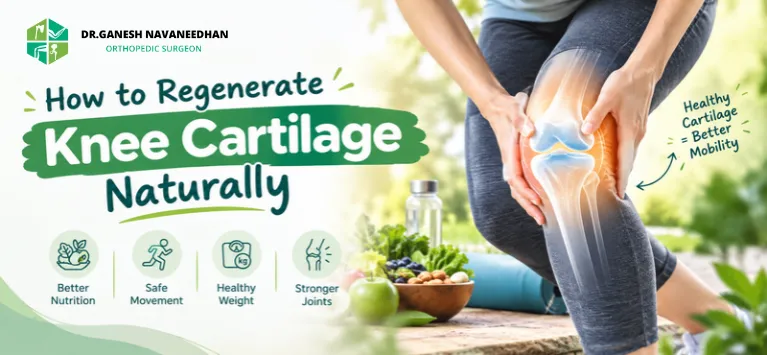
How to Regenerate Knee Cartilage Naturally

Knee pain can make everyday activities such as walking, climbing stairs, sitting down and standing up difficult. One possible reason for ongoing knee pain is damage to the cartilage, the smooth tissue that helps the bones in your knee move comfortably against each other.
Many people search for ways to regenerate knee cartilage naturally because they want to avoid surgery and protect their joints. But can knee cartilage really grow back on its own?
The important thing to know is that damaged knee cartilage does not usually regenerate naturally. However, the right exercises, a balanced diet, weight management and appropriate medical care can help reduce knee pain, improve movement and protect joint function.
What Is Knee Cartilage and Why Is It Important?
Knee cartilage is a smooth, flexible tissue that covers the ends of the bones inside the knee joint. It helps the bones glide against each other with less friction and absorbs some of the pressure created during movement.
When this cartilage becomes damaged or wears away, the knee may become painful, stiff or swollen. You may notice discomfort while walking, bending your knee, climbing stairs or standing for long periods.
Cartilage damage can happen because of ageing, osteoarthritis, sports injuries or repeated stress on the knee. The right treatment depends on the amount of damage and its underlying cause.
Can You Regenerate Knee Cartilage Naturally?
Unlike some other tissues in the body, joint cartilage has a limited ability to repair itself because it has no direct blood supply. This means that cartilage that has worn away cannot usually be restored through diet, exercise or supplements alone.
However, this does not mean you cannot improve your knee health. Strengthening the muscles around the knee, maintaining a healthy weight and choosing suitable physical activities can help reduce pressure on the joint and improve mobility.
The goal of natural knee cartilage care is to support the joint, manage symptoms and help you stay active rather than promise that lost cartilage will grow back.
6 Natural Ways to Support Knee Cartilage Health
1. Choose Knee-Friendly Exercises
Regular exercise is one of the most useful ways to manage knee pain and support joint function. Strong muscles around the knee help support the joint during everyday activities.
Depending on your condition, suitable activities may include:
- Walking: Start with short distances if comfortable.
- Swimming: Water supports your body and reduces pressure on your knees.
- Stationary cycling: Gentle cycling can help maintain movement.
- Strengthening exercises: Exercises recommended by a physiotherapist can improve support around the knee.
Avoid forcing movements that cause sharp or increasing pain. If you have significant cartilage damage, an orthopaedic doctor or physiotherapist can help you choose suitable exercises.
2. Eat a Balanced, Nutrient-Rich Diet
A healthy diet provides the nutrients your body needs to maintain bones, muscles and other tissues.
Include a variety of foods such as:
- Protein: Eggs, lentils, beans, fish, dairy products and lean meat help maintain muscles.
- Vitamin C: Guava, oranges, amla and other fruits support normal collagen formation.
- Calcium: Milk, curd, paneer and suitable fortified foods support bone health.
- Vitamin D: Supports calcium absorption and bone health.
- Healthy fats: Nuts, seeds and oily fish can form part of a balanced diet.
These foods support overall joint and bone health, but there is no specific food that can rebuild cartilage that has already been lost.
3. Maintain a Healthy Weight
Extra body weight increases the load placed on your knees during walking, standing and climbing stairs. If you are overweight, gradual weight loss may help reduce knee pain and improve your ability to move comfortably.
You do not need to follow an extreme diet. Balanced meals, regular physical activity and sustainable habits are more useful in the long term.
Weight management is an important part of treating knee osteoarthritis, although it does not directly regenerate lost cartilage.
4. Avoid Repeated Stress on the Knee
Activities involving repeated jumping, deep squats, heavy lifting or sudden changes in direction may aggravate an already painful knee.
You do not necessarily need to stop exercising. Instead, adjust the intensity and choose activities that do not worsen your symptoms.
If your knee becomes more painful or swollen after an activity, reduce the load and allow time for recovery. Persistent symptoms should be assessed rather than repeatedly ignored.
5. Use Ice or Heat When Appropriate
If your knee is swollen or painful after activity, an ice pack wrapped in a towel may help ease discomfort. Apply it for around 15–20 minutes at a time.
Heat may feel more comfortable when stiffness is the main problem, but avoid applying excessive heat to a hot or swollen knee.
These methods can provide temporary symptom relief. They do not repair damaged cartilage.
6. Be Careful With Cartilage Supplements
You may come across supplements for cartilage regeneration. However, evidence that supplements can rebuild lost knee cartilage is limited, and they should not be considered a proven cure for cartilage damage. Some supplements can also interact with medicines.
Before taking a supplement, speak with your doctor, especially if you have an existing medical condition or take regular medication.
7 Foods That Help Rebuild Cartilage
No food can directly rebuild lost knee cartilage, but a balanced diet can support joint health. Here are seven foods to include in your meals:
- Eggs: Provide protein to support muscles around the knee.
- Fatty fish: Contains omega-3 fatty acids.
- Oranges and guava: Provide vitamin C, which supports collagen formation.
- Milk, curd and paneer: Supply protein and calcium for muscle and bone health.
- Nuts and seeds: Provide healthy fats and essential nutrients.
- Leafy green vegetables: Supply vitamins and minerals.
- Beans and lentils: Provide plant-based protein and fibre.
Remember: These foods support overall joint health but cannot guarantee cartilage regeneration. Combine a balanced diet with suitable exercise and medical advice for better knee care.
What Are the Signs of Knee Cartilage Damage?
Knee cartilage damage does not always cause obvious symptoms at first. When symptoms occur, they may include:
- Pain while walking, bending or climbing stairs
- Stiffness after sitting or resting
- Swelling around the knee
- A grinding or clicking sensation
- Difficulty fully bending or straightening the knee
- A feeling that the knee catches or gives way
These symptoms can also occur with other knee conditions, including ligament injuries and meniscus tears. A clinical examination is important to identify the actual cause.
When Should You See an Orthopaedic Doctor?
Do not ignore knee pain that continues for several weeks, repeatedly returns or interferes with your daily activities. Early assessment can help identify the problem and guide treatment.
Seek urgent medical attention if you have severe pain after an injury, cannot put weight on your leg, or develop a hot, red, swollen knee with fever.
An orthopaedic doctor may recommend an examination and, when necessary, an X-ray or MRI. Treatment may include physiotherapy, medication, activity changes or selected procedures, depending on the type and severity of cartilage damage.
For certain cartilage injuries, specialised surgical procedures may be considered. These treatments are different from natural cartilage regeneration and are suitable only for selected patients.
Consult Dr. Ganesh Navaneedhan for Knee Pain in Trivandrum
If you are experiencing persistent knee pain, stiffness or difficulty walking, consulting an orthopaedic specialist can help you understand the cause and explore suitable treatment options.
Dr. Ganesh Navaneedhan provides orthopaedic care in Trivandrum for conditions affecting the bones, joints and musculoskeletal system.
An assessment can help determine whether your symptoms may be related to cartilage damage, knee osteoarthritis or another joint problem. Based on the findings, the appropriate treatment and rehabilitation plan can be discussed.
If you are searching for the best orthopedic doctor in Trivandrum, consider the doctor’s experience, relevant expertise and approach to your specific condition.
Final Thoughts
So, how can you regenerate knee cartilage naturally? Unfortunately, there is no proven natural method that reliably restores cartilage that has already worn away.
However, regular knee-friendly exercise, a balanced diet, maintaining a healthy weight and avoiding activities that worsen your symptoms can help support joint function and reduce discomfort.
If your knee pain persists, do not rely only on home remedies or supplements. Getting the right diagnosis is the first step towards protecting your knee health and maintaining comfortable movement.


