


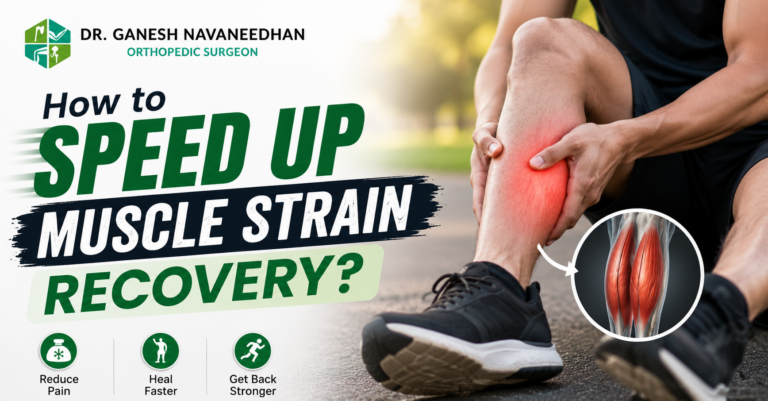
How to Speed Up Muscle Strain Recovery?

Muscle strains are one of the most common injuries people experience. Whether you are an athlete, someone who works out regularly, or someone who simply lifted something heavy at home, a muscle strain can cause pain, swelling, and difficulty moving.
The good news is that most muscle strains heal well with the right care. Knowing how to speed up muscle strain recovery can help reduce pain, prevent further injury, and get you back to your normal routine sooner.
If your pain is severe or does not improve after a few days, it is important to consult an orthopaedic specialist for proper evaluation and treatment.
In this guide, we’ll explain the causes, symptoms, recovery timeline, and the best ways to heal faster.
What Is a Muscle Strain?
A muscle strain happens when a muscle or tendon (the tissue that connects muscles to bones) is stretched too much or partially torn.
Muscle strains can happen during sports, exercise, lifting heavy objects, or even sudden movements.
Common areas affected include:
- Neck
- Shoulders
- Lower back
- Thighs (hamstrings)
- Calves
- Arms
The severity of the strain determines how long recovery takes.
Grade 1 (Mild)
- Small muscle fibers are stretched
- Mild pain
- Little or no loss of movement
Grade 2 (Moderate)
- Partial muscle tear
- More pain and swelling
- Difficulty using the muscle
Grade 3 (Severe)
- Complete muscle tear
- Severe pain
- Significant weakness
- May require surgery
What Causes Muscle Strains?
Understanding the cause can help prevent future injuries.
Some common causes include:
- Sudden twisting movements
- Lifting heavy weights incorrectly
- Overusing muscles
- Skipping warm-up exercises
- Poor flexibility
- Muscle fatigue
- Playing sports without proper conditioning
People who have had a previous muscle injury are also more likely to experience another strain.
Common Symptoms of a Muscle Strain
The symptoms depend on how severe the injury is.
You may notice:
- Sudden sharp pain
- Muscle tenderness
- Swelling
- Bruising
- Muscle weakness
- Difficulty moving the affected area
- Muscle spasms
- Pain during movement
If you hear a popping sound at the time of injury or cannot move the muscle at all, seek medical attention immediately.
How to Speed Up Muscle Strain Recovery
Healing takes time, but following the right steps can improve recovery and reduce discomfort.
1. Rest the Injured Muscle
One of the most important steps is giving your muscle enough rest.
Avoid activities that increase pain or put extra stress on the injured muscle.
This doesn’t mean staying in bed all day. Gentle movement after the initial pain improves can help prevent stiffness.
2. Apply Ice During the First 48 Hours
Ice helps reduce pain and swelling.
Apply an ice pack for:
- 15–20 minutes
- Every 2–3 hours
- During the first 48 hours
Always wrap the ice pack in a towel instead of placing it directly on your skin.
3. Use Compression
An elastic compression bandage helps reduce swelling and supports the injured muscle.
Make sure it is snug but not too tight.
If your fingers or toes become numb or change color, loosen the bandage immediately.
4. Keep the Injured Area Elevated
When possible, raise the injured body part above heart level.
Elevation reduces swelling by helping excess fluid drain away from the injury.
5. Start Gentle Movement
Once the pain begins to decrease, start moving the muscle gently.
Simple stretching and light exercises improve blood flow and prevent stiffness.
Avoid pushing through pain.
6. Eat Foods That Help Healing
Your body needs nutrients to repair damaged muscle fibers.
Include foods rich in:
Protein
Protein helps rebuild muscles.
Good sources include:
- Eggs
- Fish
- Chicken
- Lentils
- Beans
- Greek yogurt
Vitamin C
Vitamin C supports tissue repair.
Eat more:
- Oranges
- Lemons
- Guava
- Kiwi
- Strawberries
- Bell peppers
Omega-3 Fatty Acids
These may help reduce inflammation.
Sources include:
- Salmon
- Sardines
- Walnuts
- Flaxseeds
- Chia seeds
Zinc
Zinc supports healing.
Good sources:
- Pumpkin seeds
- Nuts
- Chickpeas
- Whole grains
A healthy diet plays an important role in how to speed up muscle strain recovery naturally.
7. Stay Hydrated
Muscles need water to function properly.
Drink enough water throughout the day to support healing and reduce muscle tightness.
If you exercise regularly, replace fluids lost through sweating.
8. Sleep Well
Many people underestimate the importance of sleep.
Your body repairs damaged tissues while you sleep.
Aim for:
- 7–9 hours of quality sleep every night
Good sleep helps muscles recover faster.
9. Avoid Returning Too Soon
It can be tempting to return to sports or exercise as soon as you feel better.
However, returning too early increases the risk of another injury.
Only resume full activity when:
- Pain is gone
- Strength has returned
- Movement feels normal
10. Follow a Physiotherapy Program
For moderate or severe muscle strains, physiotherapy is often recommended.
A physiotherapist can guide you through exercises that:
- Improve flexibility
- Restore strength
- Improve balance
- Prevent future injuries
Following a structured rehabilitation plan often leads to better recovery.
Recovery Timeline for Muscle Strains
Recovery depends on the severity of the injury.
| Injury Grade | Expected Recovery Time |
| Mild | 1–3 weeks |
| Moderate | 4–8 weeks |
| Severe | 2–3 months or longer |
Everyone heals differently. Factors like age, overall health, and following the treatment plan can affect recovery.
Mistakes That Can Slow Recovery
Many people unintentionally delay healing.
Avoid these common mistakes:
- Ignoring pain
- Returning to exercise too early
- Skipping warm-up exercises
- Not following medical advice
- Lifting heavy objects during recovery
- Poor nutrition
- Lack of sleep
- Smoking, which can slow tissue healing
Avoiding these mistakes can significantly improve muscle strain recovery.
Simple Exercises After Recovery Begins
Always start only after your doctor or physiotherapist says it’s safe.
Some gentle exercises include:
Light Stretching
Stretch slowly without forcing the muscle.
Walking
Walking improves circulation and helps muscles regain movement.
Resistance Band Exercises
These help strengthen muscles gradually.
Balance Exercises
These improve muscle control and reduce future injury risk.
Progress slowly and stop if pain increases.
How to Prevent Future Muscle Strains
Prevention is always better than treatment.
Follow these simple habits:
- Warm up before exercise
- Cool down after workouts
- Stretch regularly
- Stay hydrated
- Build muscle strength gradually
- Use proper lifting techniques
- Wear supportive footwear
- Avoid overtraining
- Take rest days between intense workouts
Strong and flexible muscles are less likely to get injured.
When Should You See an Orthopedic Doctor?
Most mild muscle strains improve with home care.
However, you should see an orthopedic specialist if you have:
- Severe pain
- Large swelling
- Significant bruising
- Difficulty walking
- Inability to move the muscle
- A popping sensation during injury
- Symptoms lasting more than one week without improvement
- Repeated muscle strains
Early diagnosis helps prevent complications and ensures proper healing.
Why Early Treatment Matters
Ignoring a muscle strain may lead to:
- Long-term pain
- Muscle weakness
- Reduced flexibility
- Repeat injuries
- Longer recovery time
Getting the right treatment early allows the muscle to heal properly and helps you return to your daily activities with confidence.
Final Thoughts
Knowing how to speed up muscle strain recovery is about giving your body the right support to heal. Rest, ice, gentle movement, healthy food, proper hydration, and good sleep all work together to repair damaged muscles. While most mild strains recover with simple home care, it’s important not to rush back into physical activity before your muscle is fully healed.
If your pain is severe, keeps getting worse, or doesn’t improve within a few days, consult an experienced orthopaedic specialist. Early diagnosis and treatment can prevent complications and help you recover safely. With the right care and a little patience, you can return to your daily routine stronger and reduce the risk of future muscle injuries.


