


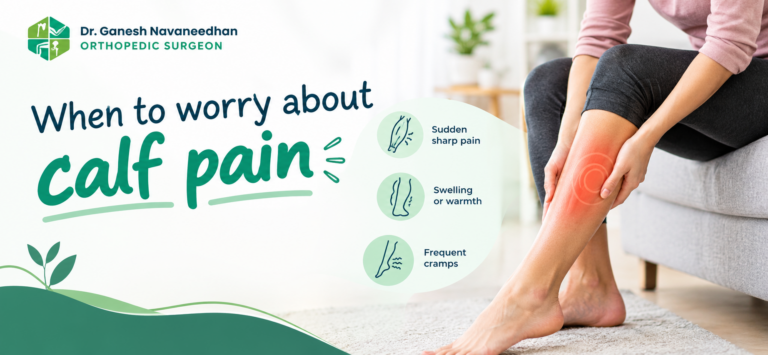
When to Worry About Calf Pain?

Calf pain is something many people experience at some point. It can happen after a long walk, exercise, standing for many hours, or even from a simple muscle cramp. In many cases, calf pain improves with rest and does not indicate a serious problem.
However, not every type of calf pain should be ignored. When to worry about calf pain depends on how suddenly it started, how severe it is, whether there is swelling or redness, and whether you have other symptoms.
Knowing the warning signs can help you understand when it is better to get medical attention.
What Causes Calf Pain?
The calf is made up of muscles, tendons, blood vessels, and other tissues. Pain can develop from problems affecting any of these areas.
Some common causes include:
- Muscle cramps
- Muscle strain
- Overuse during exercise
- Sports injuries
- Dehydration
- Standing or walking for long periods
- Problems affecting the nerves
- Problems with blood circulation
The cause is often easier to identify when the pain begins after a particular activity or injury. But calf pain that appears suddenly without an obvious reason may need more attention.
Calf Pain After Exercise
It is common to experience calf soreness after trying a new exercise, increasing workout intensity, or doing activities that your body is not used to.
A calf muscle strain can happen when the muscle is stretched beyond its normal range. You may notice pain while walking, stretching, or trying to stand on your toes.
Mild muscle soreness usually improves gradually with appropriate rest and recovery. If the pain is severe, keeps getting worse, or makes it difficult to walk normally, it is better to have it assessed.
When to Worry About Calf Pain
So, when to worry about calf pain? Pay attention if the pain is sudden, severe, unexplained, or accompanied by other changes in the leg.
Some signs that should not be ignored include:
Sudden Swelling in One Leg
If one calf suddenly becomes swollen, particularly when there has been no obvious injury, medical assessment is important.
Redness or Warmth
A calf that becomes red, warm, tender, or noticeably different from the other leg can be a warning sign of an underlying problem.
Severe or Sudden Pain
Sudden and intense calf pain should be assessed, especially if you cannot walk normally or put weight on the affected leg.
Pain Without an Injury
If calf pain begins without exercise, a fall, or another obvious cause, it is worth speaking to a doctor rather than assuming it is simply a muscle problem.
Pain That Does Not Improve
Calf pain that continues for several days, keeps returning, or gradually becomes worse should be evaluated to understand what is causing it.
Could Calf Pain Be a Blood Clot?
One condition doctors consider when someone has unexplained calf pain and swelling is deep vein thrombosis (DVT). This is a blood clot that develops in a deep vein, usually in the leg.
DVT can cause pain or tenderness in the calf, swelling in one leg, warmth, or changes in skin colour. However, these symptoms can also occur with other conditions, so symptoms alone cannot confirm that someone has a blood clot.
Certain situations can increase the risk of DVT, including recent major surgery, prolonged periods of immobility or travel, and some other medical conditions.
If calf pain occurs along with sudden swelling, warmth, or redness, especially without a clear injury, seek medical advice promptly.
Calf Pain Along With Breathing Problems
Calf pain or swelling accompanied by sudden shortness of breath, chest pain, coughing up blood, fainting, or severe difficulty breathing requires emergency medical attention.
This is because a blood clot can sometimes travel from the leg to the lungs and cause a potentially serious condition called a pulmonary embolism.
Do not wait for the calf pain to improve if these symptoms occur.
Can a Muscle Cramp Cause Calf Pain?
Yes. Muscle cramps are a very common reason for sudden calf pain.
A cramp can make the calf muscle tighten suddenly and become painful. It may happen during exercise, at night, or after prolonged physical activity.
Cramps usually last for a short period, although the muscle may remain sore afterwards. Gentle stretching and movement may help in many cases.
If cramps happen frequently, are very painful, or are associated with other symptoms, discuss them with a healthcare professional.
What About Calf Pain After an Injury?
A direct blow, sudden movement, fall, or sports injury can damage the calf muscle or other structures around the leg.
Depending on the injury, there may be pain, swelling, bruising, or difficulty putting weight on the leg.
Avoid pushing through severe pain. If there is significant swelling, severe pain, difficulty walking, or concern about a serious injury, an orthopaedic assessment can help determine the extent of the problem.
How Is Calf Pain Diagnosed?
Finding the cause of calf pain starts with understanding your symptoms.
A doctor may ask:
- When did the pain begin?
- Did it happen after exercise or an injury?
- Is one calf swollen?
- Is there redness or warmth?
- Does walking make the pain worse?
- Have you recently had surgery or been inactive for a long time?
- Are there any other symptoms?
The doctor may examine the leg and check its movement, strength, circulation, and tenderness. Depending on the suspected cause, tests such as an ultrasound, X-ray, or other imaging may be recommended.
How Is Calf Pain Treated?
Treatment depends entirely on the cause.
For a mild muscle strain, treatment may involve rest, gradual return to activity, exercises, and physiotherapy. Other causes may require different treatments.
This is why it is not a good idea to assume that every calf pain is a muscle problem and treat it in the same way.
If you are unsure about the cause, getting a proper assessment can help you understand what is happening and what treatment may be appropriate.
When Should You See an Orthopaedic Doctor?
You should consider consulting a doctor if your calf pain:
- Continues or keeps returning
- Makes walking difficult
- Started after an injury
- Is becoming worse
- Is associated with significant swelling
- Limits normal movement
- Does not improve with appropriate rest
If you have sudden calf swelling or unexplained pain, particularly in one leg, seek prompt medical advice to rule out conditions that may need urgent treatment.
Consult Dr. Ganesh Navaneedhan in Trivandrum
If you are looking for an orthopaedic consultation in Trivandrum for ongoing calf or leg pain, Dr. Ganesh Navaneedhan provides orthopaedic care for a range of musculoskeletal and joint-related conditions.
His clinical interests include joint replacement, trauma care, sports-related injuries, and conditions affecting the musculoskeletal system. A consultation can help identify whether calf pain is related to a muscle or orthopaedic problem and whether further evaluation is needed.
For people searching for an orthopedic doctor in Trivandrum, discussing persistent or unexplained pain with a qualified orthopaedic professional can be an important step towards finding the right cause and treatment.
A Simple Takeaway
Calf pain is often caused by something minor, such as a muscle cramp, exercise, or strain. But sudden or unexplained pain should not always be treated as a simple muscle problem.
If you notice swelling, redness, warmth, severe pain, or difficulty walking, it is important to seek medical advice. And if calf pain occurs with sudden breathing difficulty or chest pain, seek emergency care immediately.
Understanding when to worry about calf pain can help you recognise warning signs early and know when professional medical assessment is needed.


